Know every vulnerabilitybefore it knows you.
DevGuard continuously monitors your dependencies and alerts you when CVEs like this one affect your stack — with real-time threat intelligence built for developers.
GHSA-jrh5-vhr9-qh7q
 craftcms/cmscraftcms/cms
Summary
A vulnerability in CraftCMS allows an attacker to bypass local file system validation by utilizing a double file:// scheme (e.g., file://file:////). This enables the attacker to specify sensitive folders as the file system, leading to potential file overwriting through malicious uploads, unauthorized access to sensitive files, and, under certain conditions, remote code execution (RCE) via Server-Side Template Injection (SSTI) payloads.
Note that this will only work if you have an authenticated administrator account with allowAdminChanges enabled.
https://craftcms.com/knowledge-base/securing-craft#set-allowAdminChanges-to-false-in-production
Details
The issue lies in line 57 of cms/src/helpers/FileHelper.php, it only removes file:// on the most left. It is trivial to bypass this sanitization by adding 2 file://, e.g. file://file:////.
    public static function normalizePath($path, $ds = DIRECTORY_SEPARATOR): string
    {
        // Remove any file protocol wrappers
        $path = StringHelper::removeLeft($path, 'file://');

        // Is this a UNC network share path?
        $isUnc = (str_starts_with($path, '//') || str_starts_with($path, '\\\\'));

        // Normalize the path
        $path = parent::normalizePath($path, $ds);

        // If it is UNC, add those slashes back in front
        if ($isUnc) {
            $path = $ds . $ds . ltrim($path, $ds);
        }

        return $path;
    }
PoC
- Sign in with an admin account and navigate to
Settings → Assets, then create a new volume. - n the Asset Filesystem section, create a new file system and set the Base Path to
file://file:////vendor. Without the prefix, the selection fails.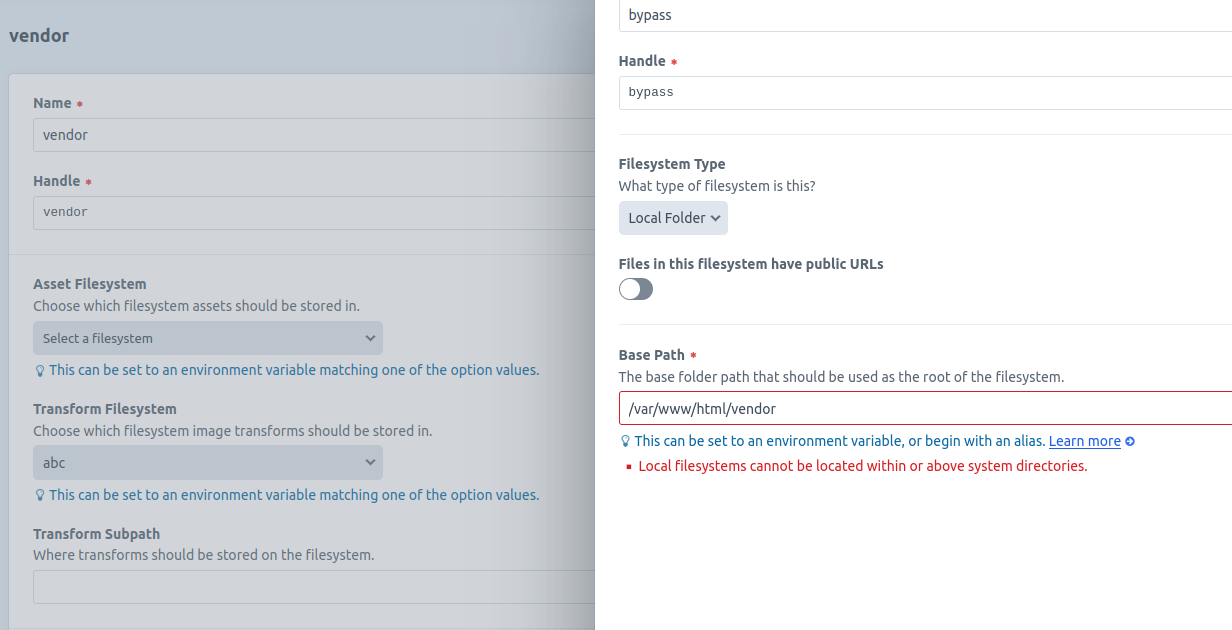 With the double
 file://prefix, the selection succeeds.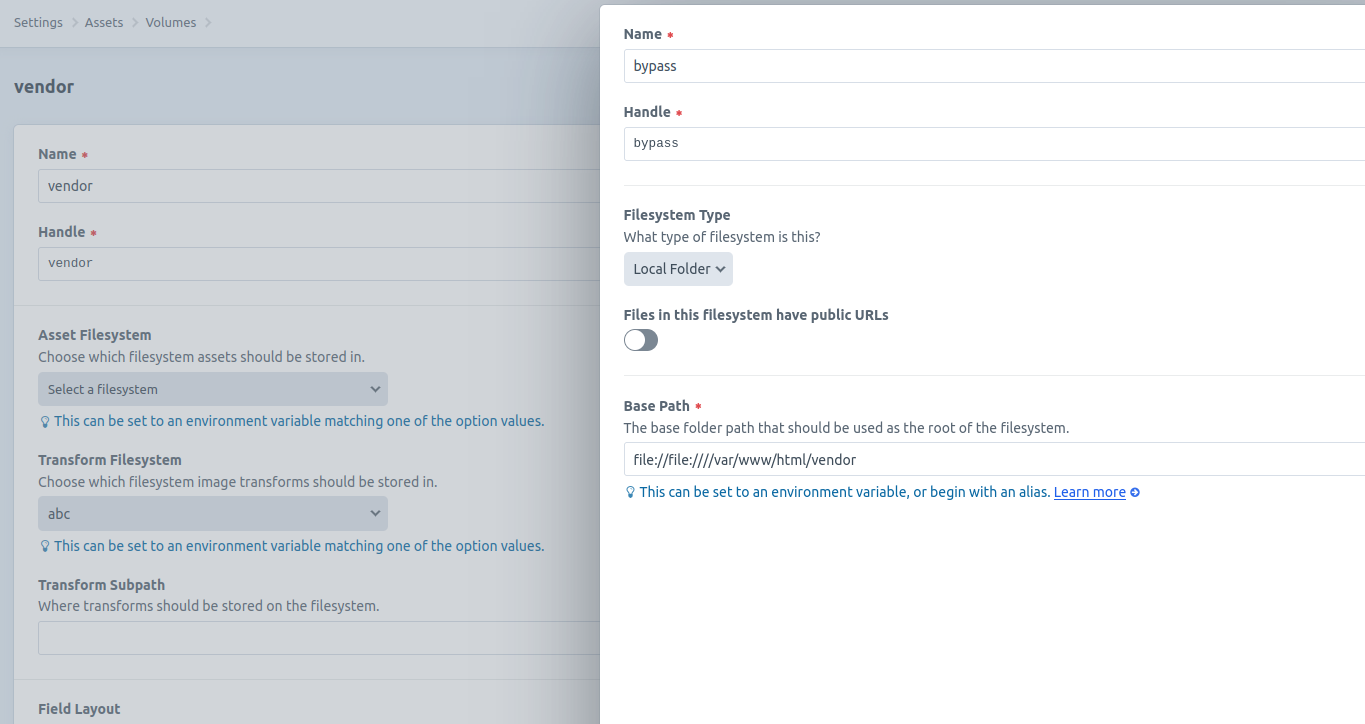
- Access Assets from the left navigation bar, then upload a file into this volume.
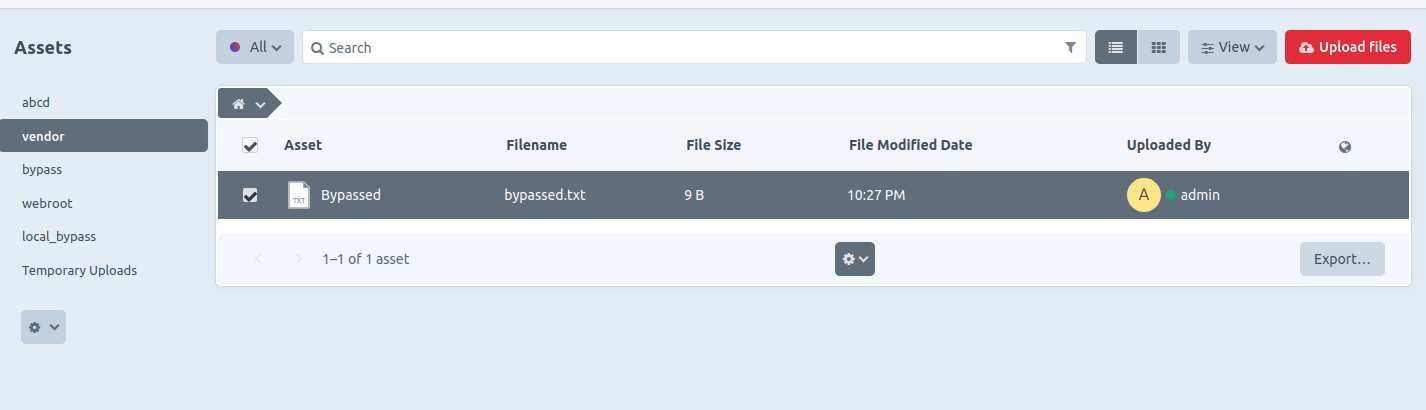
- The file is successfully uploaded and stored in the sensitive folder specified (e.g.,
/vendor).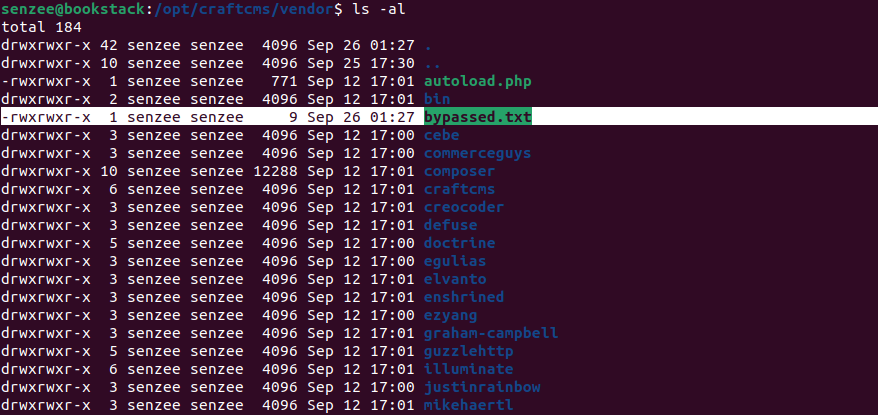
- SSTI payloads can be uploaded to
/templatesfolder, though full code execution was not achieved during testing, some payloads were still successful, leading to sensitive information disclosure, among other potential impacts.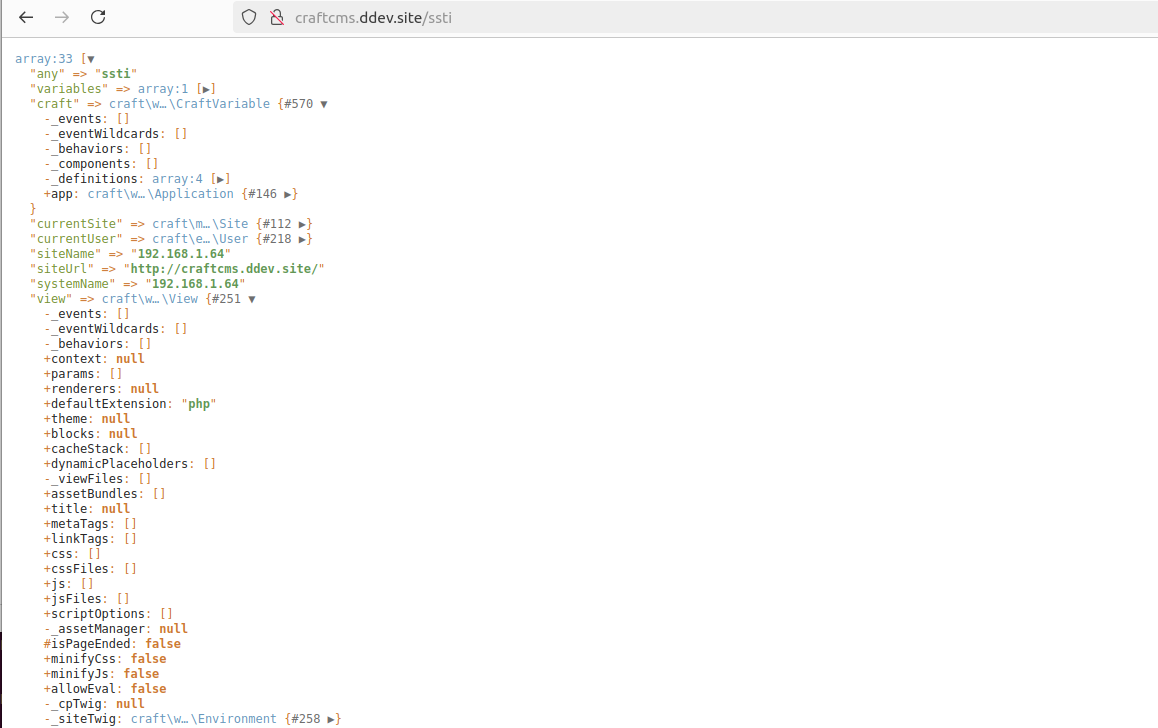
Impact
Attackers who compromise an admin account(The admin user is not equal to the server owner) can exploit this flaw to assign sensitive folders as the base path of the filesystem. For instance, if the path /templates is specified (e.g., file://file:////var/www/html/templates), the attacker could upload SSTI payloads. While CraftCMS includes strict SSTI input sanitization, RCE may still be possible if the attacker can craft a valid payload, as seen in similar vulnerabilities (e.g., GHSA-44wr-rmwq-3phw).
Additionally, attackers can upload tampered files to overwrite critical web application files. By enabling public URLs for files in the specified filesystem, they can also retrieve sensitive files (e.g., configuration files from the local file system).
Although the vulnerability is exploitable only in the authenticated users, configuration with ALLOW_ADMIN_CHANGES=true, there is still a potential security threat.
Upload your own SBOM in CycloneDX 1.6 or higher (JSON) directly here to check your vulnerabilities.
Drag and drop some file here, or click to select
The vulnerability can be exploited over the network without needing physical access. It is easy for an attacker to exploit this vulnerability. An attacker needs high-level or administrative privileges. The attacker needs the user to perform some action, like clicking a link. The vulnerability can affect other systems as well, not just the initial system. There is a high impact on the confidentiality of the information. There is a high impact on the integrity of the data. There is a high impact on the availability of the system.
Exploitation activity has been observed. Apply available patches or mitigations urgently.
The exploit probability is very low. The vulnerability is unlikely to be exploited in the next 30 days.
We did not find any exploit available. Neither in GitHub repositories nor in the Exploit-Database.
Browse More
Continuously monitor your dependencies and get alerted when vulnerabilities like this one affect your stack.
Checkout DevGuard